
How Do I Prepare My Child for Preschool?
Beginning preschool is a big, exciting step for both kids and parents alike! Many parents feel trepidation, wondering if their child is ready for preschool. The good news is this, being ‘ready’ for preschool is not about reciting the alphabet or sitting perfectly still. Being prepared for preschool comes more from feeling safe, confident, and ready to learn in a new daycare/childcare setting so as to support and grow their early childhood education. Let’s take a look at some ways you can help prepare your child for a great start to preschool!
Here at Chester Child Development Center, we are ready to help you and your little one adapt to a new preschool environment! Come by for a tour and bring your child to give them a feel for our school and let them meet our teachers.

1) Build a predictable routine (before the first day)
Preschool days run on rhythms—arrival, play, snack, circle time, outdoor time, rest. Instituting a simple morning and evening routine at home helps your child’s body and brain know what to expect, reducing anxiety and daily stress. Consistent routines support sleep and daily functioning, as well, which can help make the transition to daycare/preschool even easier.
Try this:
- Practice waking up, getting dressed, eating breakfast, and getting out the door at the same time each day
- Do a “practice run” of the drop-off routine (even driving the route to school once or twice)
- Keep bedtime as a routine and an actual time steady for 1–2 weeks before school starts
We would love to be part of your morning routine here at Chester Child Development Center. We are up and at ’em early, opening our doors at 6:30 am and closing at 6:00 every day.

2) Practice separation in small, confidence-building steps
It is completely normal for your child to have some nerves about being away from you for the day. One of the easiest ways to prepare is to practice separation in low-pressure ways. Zero to Three recommends using routines and a consistent goodbye ritual to make leaving easier for young children.
Try this:
- Leave your child with a trusted adult for short tips (like a grocery store run) and come make sure you come back when you say you will.
- Create a simple goodbye script and routine: “I love you. I’ll be back after nap.” with a special routine like a hug and high five before you part.
- Send a comfort item if allowed like a family photo or small lovey
Our teachers here at Chester Child Development Center are here to support you and your little one, as well as make drop off fun! Come on by for a tour and say “hi!”
3) Focus on self-help skills, not academics
 Many parents put some kind of pressure to on themselves to “teach” preschool readiness. In reality, the most helpful early childhood education skills are self-care, communication, and independence. NAEYC encourages families to build self-help skills such as washing hands, blowing noses, and asking adults for help when needed because these skills empower kids and help them advocate for themselves in group settings.
Try this:
- Practice washing hands, using tissues, putting on a coat, and cleaning up toys
- Help your child learn to say basic needs: “I need help,” “I’m thirsty,” “I have to go potty”
- Talk with your child’s teacher if you have any concerns
Here are Chester Child Development Center, we are all on your child’s team to help them grow and be successful in their early childhood education and beyond! Call us today to ask about enrollment and to schedule a tour!
4) Grow social skills through play
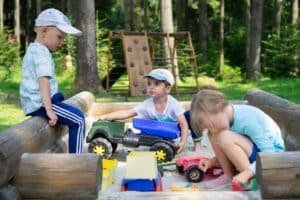
Preschool is a world of growth–physically, emotionally, mentally, and socially, as well. Whether your child is home, at daycare, childcare, or preschool, playdates, library story time, or a trip to the playground all give children practice with sharing, turn-taking, and joining group play. The CDC recommends encouraging preschoolers to play with other children to build social skills like sharing and friendship.
Try this:
- Help by narrating problem-solving: “You both want the truck—what can we try?”
- Practice modeling and teaching simple phrases: “Can I play?” “My turn next?” “Stop, I don’t like that.”
- Read books about starting school and talk about feelings
We are very intentional with relationships and communication here at Chester Child Development Center, and we work hard to teach and model this for our students, as well. Call today to schedule a tour to see play in action and to witness friendships bloom firsthand.
5) Partner with your child’s teacher from day one
The best way to set your child up for a solid foundation in early childhood education is to partner with your child’s school and teacher from the beginning. Share your worries, your child’s specific comfort strategies, toy preferences and even naptime routines to help your child’s teacher better support your little one in their transition to a new preschool or daycare.
Try this:
- Share what calms your child, such as special songs, phrases, or comfort items
- Ask how you’ll communicate, whether it be through daily notes, app updates, or check-ins
- Keep drop-offs calm and consistent—even if emotions show up
We believe childcare works best when parents and teachers alike come together as a team. Connect with us here at Chester Child Development Center to learn how we communicate with families and support each child’s unique needs.

Preparing your child for preschool isn’t about perfection or being above and beyond their peers, it’s about building confidence, routines, and connection to set them up to learn with confidence. With the right support, your child can step into preschool feeling capable, cared for, and ready to grow.
Is Play-Based Learning Effective? Why Learning Through Play Works in Preschool
 For young children, learning doesn’t happen at a desk with a worksheet. Tall towers made of blocks, pretend kitchens full of elaborate tea party essentials, songs with friends, climbing up the steps to the slide…these are the places that learning happens in early childhood education. Research is consistently supporting the reality that play-based learning is one of the most effective ways young children learn. Play is not a distraction from learning, play drives learning–building a child’s cognitive, social, emotional and physical skills that will set them up for success well beyond the preschool years.
Want to see learning through play first-hand? Schedule a tour here at Chester Child Development Center and see how we intentionally plan and support play every day.
Play Builds Strong Brain Development
According to the American Academy of Pediatrics, play supports healthy brain development by allowing children to engage in problem-solving, decision-making, and creative thinking. whether at daycare, preschool, or at home, while playing, a child’s brain is active and working. As they pretend, explore, and engage their environment, they are building neural connections that will lay the foundation for memory, attention, and flexible thinking as they grow.
We know that play is pivotal and make a point to plan different types of play, including free play, to stretch and grow our students in a variety of ways. Call us today here at Chester Child Development Center to schedule a tour and see what our lesson plans from class to class.

Play Strengthens Language and Early Literacy Skills
Play naturally encourages conversation because it gives children a meaningful reason to use language. Children are challenged to explain their ideas, describe stories, negotiate with other children and so much more. This is a solid way to strengthen vocabulary, sentence structure and storytelling. It is like a language workout that a child doesn’t even know they are participating in! Research summarized by Zero to Three emphasizes that young children build language most effectively when communication is embedded in meaningful, engaging activities—such as play—rather than through rote instruction alone.
Call us up here at Chester Child Development Center; we would love to show you and your family our classrooms, various toys and play areas, as well as our outdoor spaces and playgrounds! Come see how our early childhood educators weave meaningful play into the day-to-day life of their class.
Play Supports Social and Emotional Learning
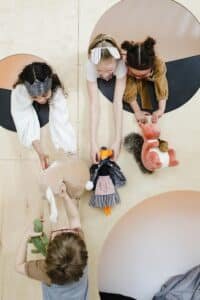
The development of social-emotional skills is essential, not just for success in school but for success in life as a whole. Through play, kids have to learn how to cooperate, take turns, resolve conflict, manage emotions, and learn to be good friends, siblings, and, well, people. The National Association for the Education of Young Children (NAEYC) emphasizes this, finding that play-based learning helps children develop self-regulation, empathy, and positive relationships.
Our preschool and childcare teachers here at Chester Child Development Center seek to encourage strong friendships and quality play among their students. From purposeful conflict resolution to solid classroom management, our teachers create an amazing environment for our students to play and learn. Schedule a tour to meet some of our amazing educators and to see learning (and play) in action!
Play Encourages Problem-Solving and Early Math Skills
Who knew you could practice math on the block center carpet? Block building, puzzles, sorting games, and even card games help introduce and reinforce early math concepts. Skills like counting, patterns, measurement, and spatial awareness all come up in these types of play without you even knowing it! While this might not be traditional ‘school work’, Head Start highlights that early math isn’t just counting—children build math concepts like shapes, measurement, and spatial sense naturally as they play and interact with objects.
Call today to schedule a tour and check out our various play areas here at Chester Child Development Center–from blocks and pretend play corners to book nooks and outdoor play spaces, we have it all!

Play is at the Heart of Early Childhood Education
Play-based learning supports the way young children naturally learn. Here at Chester Child Development Center, we know the importance of play and make it a point to create fun and engaging lessons that will keep your little one learning and growing all while having the best time! Because when learning feels like play, children don’t just grow, they thrive.
New Year’s Activities for Preschoolers From Chester Child Development Center
A New Year feels like a fresh start—even for the littlest members of the family! The best New Year’s activities for preschoolers are about playful learning that nurtures and coincides with their early childhood education and development. Research consistently shows that play is a powerful driver of growth in early childhood education, helping children build both brains and confidence. Let’s take a look at some engaging and developmentally appropriate activities to help you and your little one ring in the new year, together.
Looking for a preschool or daycare that takes everyday moments and turns them into meaningful learning opportunities? Come see us here at Chester Child Development Center to see how we meet our students where they are at and make purposeful learning of play!

1) “I Can” Goals
Preschoolers can set goals for the new year, as well! Developmentally appropriate goals such as “I can zip my coat” or “I will try a new food” might sound like small beans to an adult, and a mountain to a small child. Write out these “micro-goals” and let the child decorate the paper. Practice their goals together and watch them grow! Offer lots of encouragement and talk with them about their goals and accomplishments. These “serve and return” exchanges don’t just build relationships, but according to the Harvard Center on Child Development, they help shape early brain architecture and language skills, as well.
Here at Chester Child Development Center, we are here to help your child pinpoint and crush their early childhood education goals! Call us today to schedule a tour to meet our teachers and learn more about our daily rhythms and curriculum.

2) Balloon Pop Countdown
This is a fun alternative to waiting up for midnight! Fill 6–10 balloons with simple paper prompts like: “Count to 10 in a silly voice,” “Hop 5 times,” “Name 3 colors,” or “Find a circle.” Pop one balloon at “noon” (or whenever works for your family), then 1 o’clock, 2 o’clock and so on, to create a kid-friendly countdown! You can countdown to bedtime to keep them included in the festivities without keeping them up. This works on key skills in early childhood education–math, gross motor, or whatever you want to include. The CDC highlights that preschoolers learn through play, movement, and social experiences with peers and caring adults.
Blending learning and play is essential whether your child attends day care, preschool or childcare or if they stay home with a parent or caregiver! It’s no exception here at Chester Child Development Center where we make a point of integrating multiple varieties of play into our learning, daily. Come for a visit to see learning in action!

3) Confetti Science

STEM experiences promote curiosity, critical thinking, and early scientific reasoning, all of which are important building blocks in early childhood education (source). Try this New Years themed STEM experiment that is both incredibly simple and engaging:
Punch confetti from paper with a hole punch (or with scissors), tossing the bits in the air to see how they fall to the ground. Experiment with the fan on or with different sizes and types of paper to see the difference it makes! Finish it all off with a loud “Happy New Years!” and a quick toss of the confetti just for fun! Bonus, homemade confetti is easy to vacuum!
Our teachers love bringing simple science experiments into their classrooms here at Chester Child Development Center. Schedule a tour and check out our weekly lesson plans to see how each age group implements STEM experiments into their daily learning.
4) Make a Kindness Chain
Cut paper strips and brainstorm with your child or preschool classroom to write one kind action on each one such as, “Help a friend,” “Share a toy,” “Say thank you,” and “Invite someone to play.” Link them into a chain and work together to add a new one each day. As you go about your days, challenge the children involved to practice spreading kindness, using the examples written on the chain to spark ideas.
Here at Chester Child Development Center kindness is a top priority. We encourage kindness between all students, teachers, and parents. We would love to share some of that kindness with you and your family; Call us today and schedule a tour!
5) Memory Jar: “Best Moments” Storytelling

At home, within a preschool or daycare classroom, or even amongst friends at a playdate; have your preschooler draw one happy moment from the past day/week and drop it into a jar. Do this through the month of January (or whenever, really) and read them all together, reflecting on the good times and stories they represent. Allow children to practice their storytelling skills here, which are great for building vocabulary, sequencing, communication skills and connection. Research has shown that storytelling can also help set children up for later reading and writing, as well!
We would love to be a part of some of your best moments! Call us up here at Chester Child Development Center and let’s chat about how we can partner with your family to set your little one up for a great year and a solid early childhood education!
Ready for a Fresh Start?
The new year is a wonderful opportunity to remember that big growth often comes from the smallest moments—stacking blocks, sharing a laugh, trying again, or proudly saying, “I did it!” When given time to play and explore, preschoolers will build skills that last past holiday festivities and well into the New Year.
Here at Chester Child Development Center, we nurture our students’ curiosity and wonder with engaging activities that support connection as well as early childhood education. We would love to have you come visit our school, meet our teachers and see how we help our little learners grow–not just for the new year, but for all the years to come. Call us today and let’s make this year your child’s best, together!
Creating Christmas Magic: Holiday Traditions That Strengthen Early Childhood Education

Watching Christmas through the eyes of young children is truly an enchanting experience. Creating Christmas magic is more than just building sweet family traditions, it supports your child’s early childhood education, as well! The simple, repeated traditions at home or in daycare or preschool classrooms can do everything from building stronger language skills to creating a strong sense of belonging that will lay a foundation for learning throughout life (Source). From special homemade sugar cookies to beloved classic books read year after year, cherishing the Christmas season can be as sweet and simple as you want it to be. In this article we will take a look at some lovely traditions that you can incorporate into your Christmastime, as well as some of the ways that these traditions support early childhood education.
Here at Chester Child Development Center, we value meaningful traditions while supporting development and fun through the busy holiday season. Call us today to schedule a tour and talk about our classrooms, holiday plans, and enrollment opportunities.
The Importance of Christmas Traditions
Research shows that family rituals and traditions help children feel secure, connected, and loved. They are linked to better emotional regulation, resilience, and even stronger school adjustment and academic outcomes. When children feel safe and secure, it is easier to learn and gives them more confidence to want to learn. Traditions also turn a busy time into something a little more predictable and safe! Yes, the daily schedule might be off, but doing the same activities that they did last year can bring a calmness that only comes from knowing what to expect to the chaos.
Here at Chester Child Development Center, we would love to be a part of your family’s traditions and to have you be a part of ours! Call us today to ask about our yearly traditions. Schedule a tour to take a look at our festive lesson plans and see how we celebrate Christmas!
Tradition Idea #1: A Simple Christmas Countdown Ritual

Instead of a candy-filled advent calendar, try a short nightly countdown that builds the anitcipation for Christmas, and also gives the child a visual tracker of the days they will have to wait. Practicing waiting is an important skill developed in early childhood education that will serve children for life:
- Light (or pretend to light) a candle–this builds on number knowledge through counting days
- Sing the same simple song each night–repeated books, phrases, and songs can help with language development.
- Add a sticker to a calendar or remove a link in a paper chain
Daily routines help preschoolers and toddlers feel safe and calm, especially helpful during the busy holiday season. Organizations like Zero to Three note that predictable routines support emotional security and learning–so keeping a routine or two amidst the chaos can be a helpful and sweet bonding opportunity.
Here at Chester Child Development Center we offer a calm and supportive environment through the busy season, while also embracing the fun and the magic! Make us a part of your daily routine and enroll your child today!
Tradition Idea #2: Storytime With Meaningful Repetition
 Reading the same books over and over might get quite boring for adults, but it is amazing for young minds! Pick one or two favorite Christmas books to read multiple times throughout the Christmas season. You will support your child’s early childhood education in helping them broaden their vocabulary, narrative structure, and comprehension (Source).
Sprinkle some magic on your reading time:
- Let your child “read” the pictures or finish predictable lines.
- Ask simple questions: “Who is this?” “What happens next?”
- Connect the story to real life: “We’re eating cookies just like the character did!”
- Do a craft, activity, or bake in conjunction with the story.
We love reading here at Chester Child Development Center! Schedule a tour and come see some of our favorite holiday books and let us share our daily magic with you!
Tradition Idea #3: Giving and Gratitude Rituals
Refocusing this exciting season of Christmas onto giving and being grateful for what you have is huge. Whether your child attends childcare of daycare or stays home, children tend to be inwardly focused–which is completely developmentally appropriate. Intentionally focusing on gratitude and giving sets a new tone for the holiday season, encouraging the development of empathy and social skills with activities that your preschooler can participate in.
- Let your little one pick out a toy or canned goods to donate–there are plenty of causes that would love the support this Holiday season!
- Have your toddler or preschooler create simple cards or drawings for neighbors, teachers, family, nursing homes, or overseas military!
- Start a “gratitude bedtime ritual” where each night they share one thing they enjoyed that day.
-
Keep the thankfulness from Thanksgiving going and continue making a list or visual with things your child is grateful for, reviewing them every chance you get.

Experts support that family rituals give children a sense of identity —“this is who we are; this is what it means to be part of our family”—and are linked with emotional well-being and positive social development.
Come see us here at Chester Child Development Center! We would love to show you around and chat about how we encourage and teach our students about the “joy of giving” this Christmas season.
Tradition Idea #4: Cozy Traditions
As the cold wind blows, set some fun traditions in place that might not be extravagant, but are extremely lovely. It doesn’t take much to add some extra magic to the every day.
- Hot cocoa after playing outside (especially if it has snowed!)
- Family time around the fireplace
- Candle-lit dinners to brighten the early arrival of night
- Make Snow-cream with fresh snow.

The American Academy of Pediatrics notes that children do best when routines are regular, predictable, and consistent. These small additions can be incorporated into the already-established routine, while still adding a little bit of holiday magic.
Routines are our bread and butter here at Chester Child Development Center. Call today to schedule a tour and meet our lovely early childhood education teachers and find out how they bring they make the season festive while still holding to their routines.
Making Magic and Memories
 Christmas traditions don’t have to be big or expensive for them to be memorable and special. Focus on the connection, joy, and relationships, rather than monetary or societal expectations. Doing so will keep the magic and the memories going well after the holiday decorations have been put away.
Ready to find a childcare or preschool that values your family, your traditions, and works hard to create lovely and developmentally rich experiences for your little one? Call us here at Chester Child Development Center and ask about our early childhood education program and our classroom openings!
Navigating Holiday Family Gatherings With Preschoolers
Tips for Keeping the Holidays Happy

The arrival of the holidays also tends to bring lots of events, busyness, and schedule-disrupting activities. Because preschoolers thrive on predictable rhythms, this can bring a lot of chaos to an already busy season. Rather than embracing a ‘Grinchy’ mood and avoiding all festivities that you can, with a few boundary-friendly habits and realistic expectations, this holiday season your little one’s face can be full of joy rather than overstimulation.
Looking for some simple tips to help this holiday season go off without a hitch? Take a look at these research-backed strategies that you can implement not just for the sake of your preschooler, but for your entire family, as well.
Here at Chester Child Development Center, we know that the Holidays can be a stressful, though magical, time of year. Call us today to ask about our holiday schedules and how we can support your family through this season of togetherness while still keeping the holiday magic alive.
1. Start with a simple “game plan”
Within early childhood education, letting children know what to expect is huge to help ease any insecurity that a child might feel about a situation or event. Before you arrive, prepare your child for the event with a brief preview: who will be there, where they can play, when food will happen, and where they can go if they need help or a break. This “social script” will help lessen any anxiety that they might have as well as aid with any transitions. A preview will also set you up to reinforce the same plan on-site.

2. Keep some schedule staples
As mentioned earlier, preschoolers really benefit from having a schedule that they can anticipate. Try keeping some schedule staples like nap/quiet time or a familiar bedtime routine. The U.S. Office of Head Start agrees that keeping a couple of routines steady through times of disrupted schedules helps kids regulate in noisy, new spaces.
Schedules are everything for us here at Chester Child Development Center. We like to keep in line with our daily rhythm while also bringing in some special holiday festivities. Schedule a tour to see our varying classroom schedules and to ask about our plans for the holidays!
3. Prime them with “serve-and-return” connection
Eye contact, short back-and-forth chats, and shared play are all “serve-and-return” interactions, according to Harvard’s Center on the Developing Child. Engaging in serve-and-return actions with your little one before and during the event will help kids feel safe, seen, and ready to explore. You are your child’s safe place, so touching base to make sure they know you are there, paying attention, and available if they need you can make a world of difference.

4. Support body autonomy
Set children up for quality boundaries while also modeling consent with an easy-to-implement script, like: “Would you like a hug, a high-five, or a wave?” Whether greeting teachers at daycare or childcare, a friend on the playground, or a family member at a holiday event, respecting your preschoolers answer to this question teaches that their body is theirs. The American Academy of Pediatrics supports this concept in that it builds a foundation for safety now, as well as for later in life. Offering alternatives to forced hugs gives everyone a simple way to set expectations and greet warmly while honoring boundaries.
Body autonomy is majorly important–especially in early childhood education. Laying a solid understanding of boundaries and respect for their body and others will help support and keep children safe as they grow. Our educators here at Chester Child Development Center are very intentional to cultivate a safe environment that lays a solid foundation for safety and learning through preschool and beyond. Schedule a tour with us today to meet our teachers with their classes in action!
5. Cultivate calm spaces and play

Upon arrival, scan the host’s space or ask them where a safe place is for your little one to play. Bringing a small bag of travel toys can provide some entertainment in any environment–especially in places that are not otherwise set up for kids. Additionally, let your child know where they can come to find you should they need help or a place to rest. A handful or quiet time activities or a book and cozy blanket can be incredibly helpful should your little one feel overstimulated or stressed. The Child Mind Institute has found that many children—even those without sensory differences—do better when they can step away from bright lights and loud rooms.
Looking for some easy activities to bring along to the next holiday event or family gathering? Schedule a tour today and chat with our teachers here at Chester Child Development Center! They have tons of ideas and activities up their sleeves that they are ready to share.
6. Debrief on the ride home
A quick “rose/bud/thorn” check-in (favorite moment, something new, something hard) builds self-awareness and resilience–important skills to develop in early childhood education. This also offers a connection point with your little one to find out their take on the event and to be there for them further if there is anything they would like to talk through. This sets a foundation of trust that will encourage communication and touching base in the future–which will be huge as they gain independence and no longer physically require touching base with a parent or caregiver as often.
Manage Expectations

Remember that with preschoolers, sometimes the goal is “good enough” rather than “picture perfect.” Shorter stays, comfy clothes, or arriving after nap might make the difference between meltdowns and memories. As a parent, preschool teacher, or caregiver, you can protect boundaries and honor early childhood development while building joyful connections. Looking for support in your child’s early childhood education journey? Call us up here at Chester Child Development Center today and let’s chat about how we can come alongside your family this holiday season and beyond.
When Big Feelings Hit: Helping Preschoolers Manage Emotions
Preschoolers feel everything in a big way, within early childhood education, those “big feelings” aren’t misbehavior; they’re messages, and they are developmentally appropriate. With the right tools, relationships, and time, children learn to understand emotions and manage them safely. These skills are a cornerstone in their education, setting them up for future learning, friendships, and general well-being for years to come. This article offers some researched and simple actions to help children learn and grow through their social and emotional milestones. Keep reading to help your preschooler on their way to a calm and regulated future!
Come see how our program here at Chester Child Development Center helps support children wholly, not just academically. Call today to schedule a tour!

Why preschoolers have such BIG feelings
While children are small the parts of their brain systems that feel are well-wired, while the parts that manage feelings are still under construction. Responsive, back-and-forth “serve-and-return” interactions with caring adults literally shape brain architecture and lay the foundation for self-control and resilience. (Source) According to the organization Zero to Three, co-regulation—borrowing a calm adult nervous system—helps young children settle and learn to regulate over time.
We know that early education is all about learning–and not just the ABC’s, but about friendship, managing frustrations, paying attention to instructions, and so much more! Schedule a tour with us here at Chester Child Development Center, we would love to show you how we help our students thrive!
1. Teach the words

Labeling emotions is a science backed way to help preschoolers understand and communicate their feelings, eliminating a number of tantrums before they start. This can come from a parent, caregiver, daycare or childhood teachers, and so on! Statements such as “You’re frustrated; your block tower fell over” will give children the words to use when a similar situation erupts later. It will take time, but eventually they will be able to say how they feel, rather than melt down with no communication. Research links early skill in identifying and naming emotions with better emotion regulation later on. PubMed
Our early childhood educators here at Chester Child Development Center are very intentional to slow down and help their students name and work through their feelings. Call our office and schedule a tour to meet our teachers, see our facility, and let us show you how big feelings are managed from classroom to classroom.
2. Build a calming toolbox
Preschoolers need concrete strategies they can do: belly breathing, starfish hands (trace and breathe), wall pushes, squeezing a fidget toy or stuffy, or a cozy corner with books and soft lighting. The American Academy of Pediatrics encourages naming the feeling, offering choices, and praising children when they use words or calming strategies. Pre-teaching and rehearsing these tools while children are calm will give them the base knowledge of the activity to fall back on (likely when prompted by an adult) when they are in a dysregulated state.
Come see us here at Chester Child Development Center and ask about our classroom calm-down strategies!

3. Co-regulation & emotion coaching
Whether within a daycare or childcare setting or at home, adults are the emotional thermostat, and their calm (or chaos) is contagious. Soft voices and a steady presence will help deescalate the situation and bring a child down much faster than matching their energy in the midst of a conflict. Children are able to ‘borrow the calm’ of their adult and help themselves to calm down, as well (Source).
Emotion coaching teaches children how to feel and what to do with those feelings—turning emotional moments into valuable learning opportunities for lifelong resilience (Source). This looks like moving through the following steps: notice, validate, label, limit-set, and problem solve. In practice this looks like the following: ” You are frustrated that baby brother knocked over your blocks. It’s okay to feel mad; it’s not okay to hit. Let’s stomp three times together, then apologize and say “Please don’t knock over my blocks.”
Emotion coaching and conflict management are part of everyday life here at Chester Child Development Center. Come for a tour to see our wonderful educators in action!

4. Boundaries that teach
Limits keep everyone safe. There are a multitude of behaviors that can be guided with “time-in”– which keeps children close, offers them comfort, and coaches them through the coping techniques are being implemented at home or within the classroom. For aggressive or unsafe behaviors that must be addressed immediately, the American Academy of Pediatrics has found that utilizing a time-out—used briefly, calmly, and consistently—has decades of evidence for reducing aggression and improving compliance when paired with warm, positive relationships. Always be sure to reconnect after correction! State the issue, the rule, and the behavior or coping technique they may implement next time.
Ask about how we manage conflicts that arise here at Chester Child Development Center. We are ready and able to calmly come alongside your little one and help them through the various struggles and frustrations that come their way.
Emotional Development to last a lifetime

When big feelings hit, preschool-aged children are not simple ‘throwing a tantrum,’ they are growing and learning. Each deep breath, redirection, implementation of a coping strategy, or comforting hug will help wire children’s brains for empathy, peace, and confidence. With lots of patience and love, emotional regulation and development will come over time. Through intentionally prioritizing emotional learning, it will give your child one of the greatest gifts to support them from their early childhood education and beyond. The ability to navigate life with compassion and to self-regulate and communicate their feelings.
Here at Chester Child Development Center, we strive to help our students develop and grow to set them up for a peaceful and regulated life well past their ABC’s and 123’s!